
Consistent Characters in AI Short Drama: H3 Max Turbo Face Lock vs H3 Max, Seedance, Kling O3 and Wan 3.0

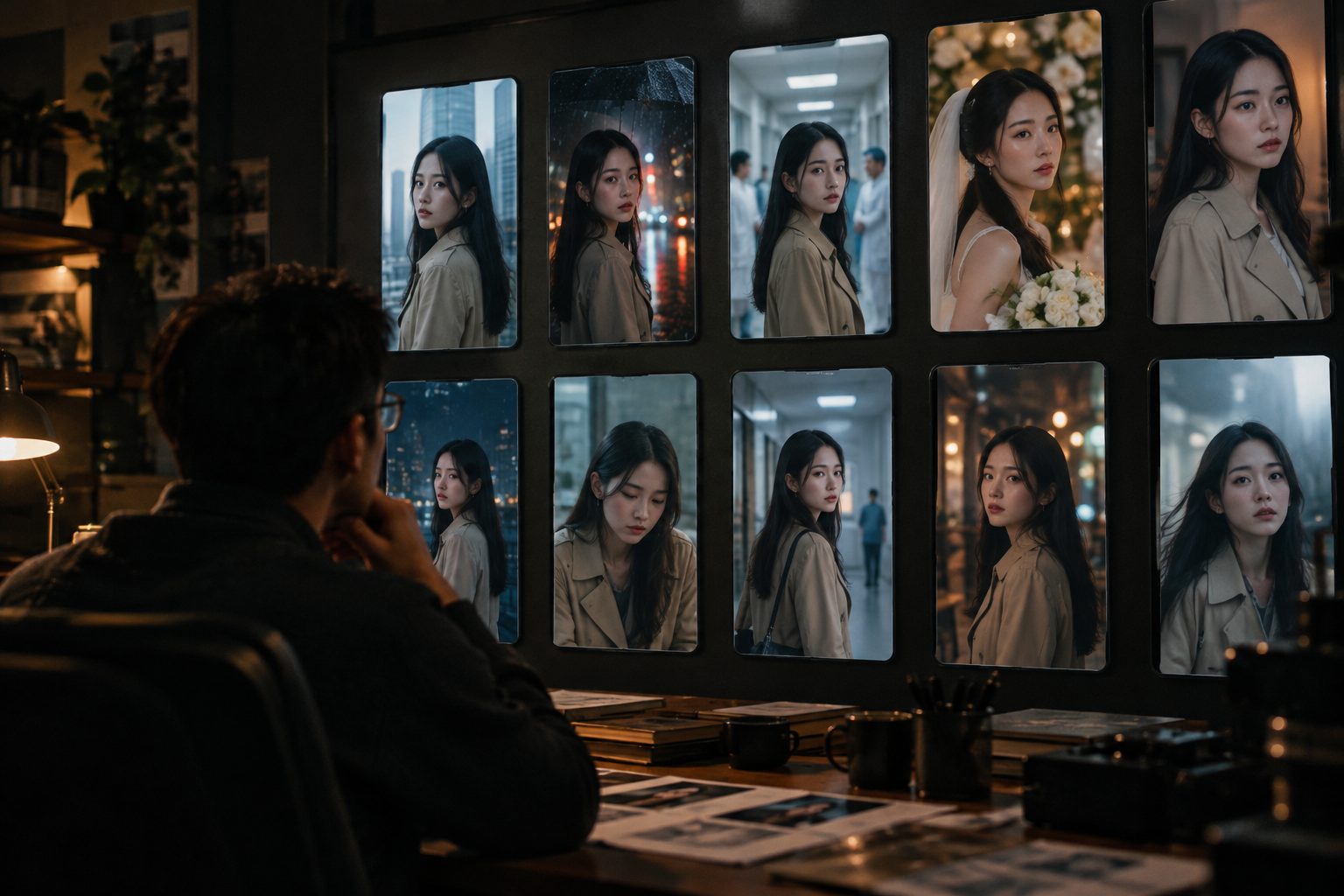
Episode three, shot twelve: the heroine turns around in a hospital corridor. You watch it for three seconds and something is off. Thinner eyebrows, a slightly higher nose bridge, and the trench coat went from double-breasted to single-breasted. Eleven shots of her, and then one of her cousin. You have to reshoot it, and the two shots around it, because the cuts no longer match.
That is not an image-quality problem. It is an input problem. The shot was drawn from a single storyboard still used as the first frame, so the model never had her face. In a short drama one character has to hold across dozens of shots and several scenes, and with first frames alone, drift is only a matter of time. In October 2026 MiniMax H3 Max Turbo got a reference-to-video endpoint on fal, so the fast tier of the H3 family can finally lock a face.
Most model comparisons ask which single shot looks best. This one asks a different question: for a short drama with several characters and many scenes, which model keeps the same face to the last episode with the least rework?
Table of Contents
- The biggest cost in a short drama is the reshoot
- What H3 Max Turbo reference-to-video brings to short drama
- How to split reference slots across characters
- Face lock across five models
- Which model for which kind of scene
- How to do it in DramaSo
- Frequently asked questions
The biggest cost in a short drama is the reshoot
Microdrama is big business. Omdia’s report put global microdrama revenue at about $11 billion in 2025. Everyone is piling in, and the race is about release speed.
Where does an AI short drama spend its money? Not on the first render. On reshoots. An episode has dozens of shots. If one character changes faces in one shot, that shot is redone. If it sits in the middle of a shot/reverse-shot exchange, the shots around it are redone too. One drift often costs three shots.
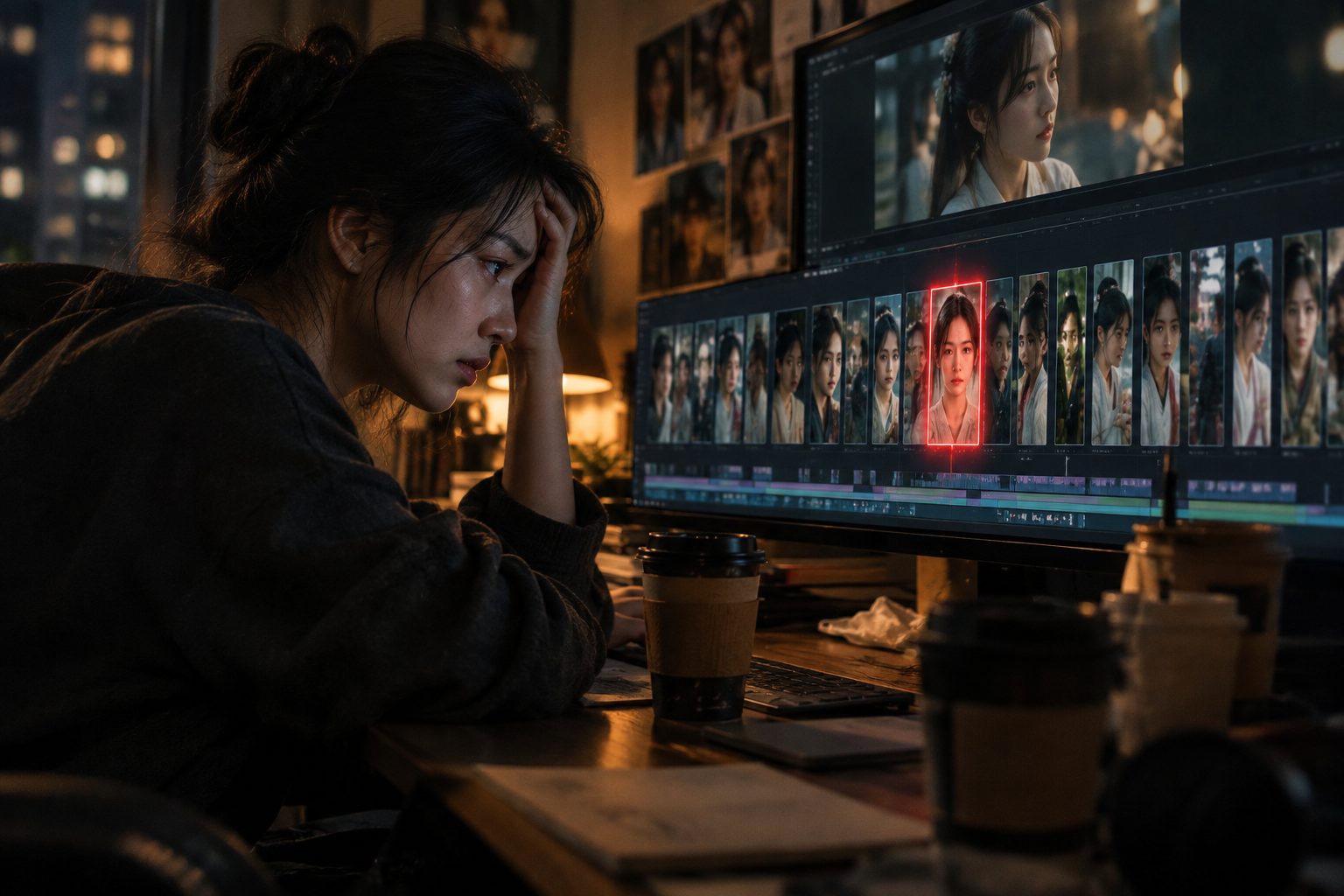
Illustration: DramaSo Team · One face drift usually drags the neighboring shots into the reshoot
So our position: face lock in short drama does not save the render cost of one shot. It saves rework. When you pick a face-lock model, check first whether it can hold the reference images for everyone in the scene, then how fast it renders, because speed decides how early you catch drift.
Practical rule: Budget one drift as three shots, not as the one shot that drifted.
What H3 Max Turbo reference-to-video brings to short drama
Until now H3 Max Turbo had text, image and first/last-frame modes. With character portraits, the best you could do was use the first one as the first frame. That locks a first frame, not a face. The next shot starts from another storyboard still and the model no longer knows her.
The minimax/h3-max-turbo/reference-to-video endpoint on fal adds a real reference slot (checked 2026-10-26):
- Up to 9 reference images, 3 reference videos and 3 reference audio clips, 12 files in total.
- The prompt refers to assets as
Image 1,Video 1,Audio 1. - 480P, 768P and 1080P, 0.92 to 15 seconds.
- No
image_urlorend_image_url, so you cannot pin first and last frames in the same request.
Be clear about price. Measured against actual billed usage on 2026-10-26, Turbo reference-to-video works out to about $0.05 / $0.08 / $0.16 per second at 480P / 768P / 1080P, the same tier as H3 Max reference-to-video. Turbo’s discount is on image-to-video (standard $0.025 / $0.04 / $0.08 per second, about half of H3 Max). For face lock, Turbo’s edge is speed, not savings: more rounds in the same time, so drift shows up sooner.
DramaSo already has it. When you render with MiniMax H3 Max Turbo and the character has portraits, the shot goes to reference-to-video automatically. The studio’s FAST switch uses Turbo again too.
Illustration: DramaSo Team · The goal of face lock is one heroine across every scene
Practical rule: When face lock costs the same, choose by speed. Iterate on Turbo; give shots that need pinned frames to H3 Max.
How to split reference slots across characters
The biggest difference between short drama and a music video is that a scene often has two or three people. Reference slots are shared by everyone in the shot, so the cap decides how many people one shot can lock.
We give each main character a “look pack”: front, profile, full-body outfit, plus one signature detail (a scar, a necklace, glasses). Three to four images per person. With that budget:
- A 9-image cap (H3 Max Turbo, H3 Max, Seedance): two characters at 4 each plus 1 for the set, or three characters at 3 each.
- A 10-image cap (Wan 3.0): three characters at 3 each plus 1 for the set.
- A 4-image cap (Kling O3, images and elements combined): two characters at 2 each, front and full body only, no profile.
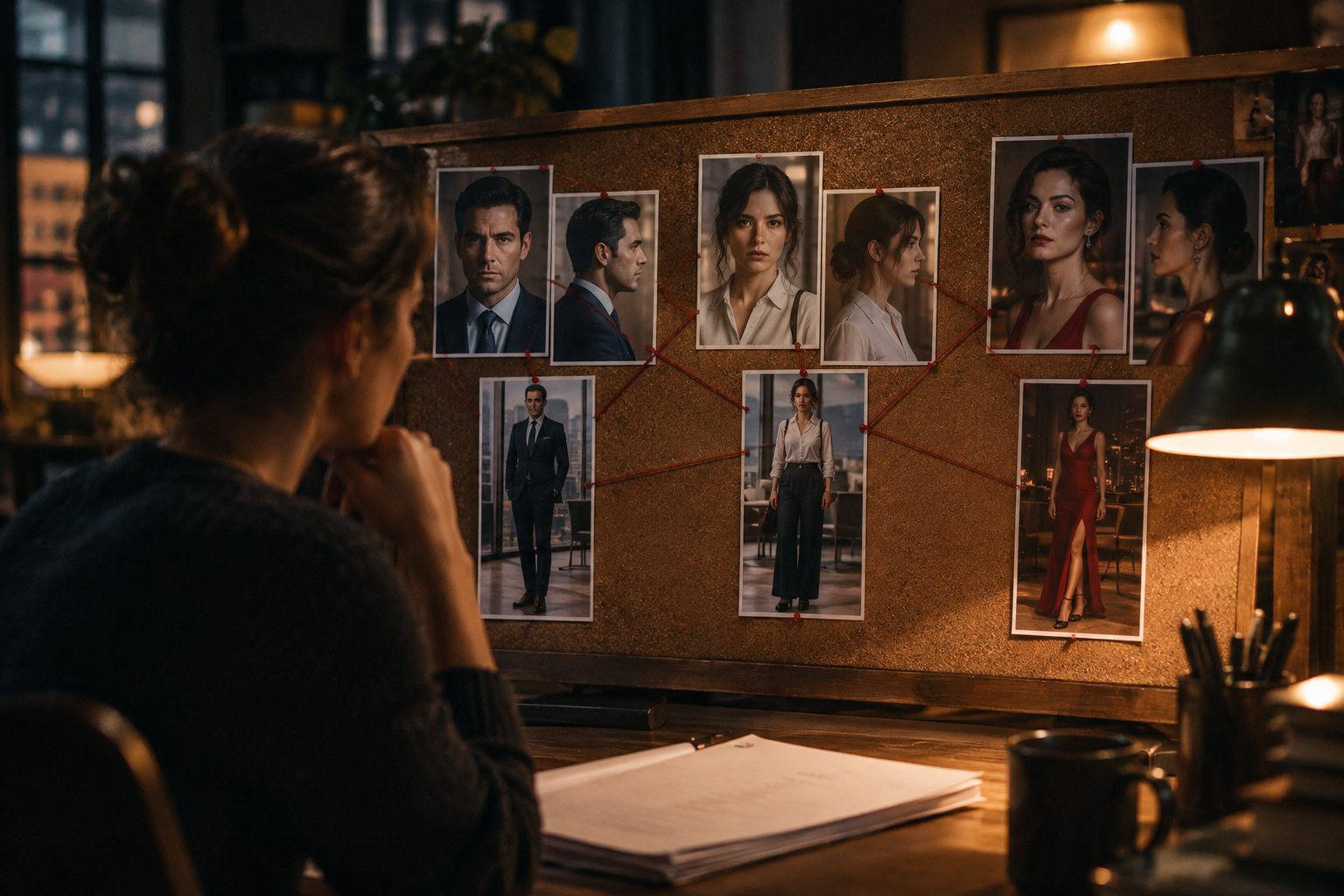
Illustration: DramaSo Team · A multi-character look pack: three or four images per person, with distinct angles
One point people miss: the prompt has to say who is who. The H3 family uses the woman in Image 1 and the man in Image 5; Seedance and Kling use @Image1. When two people share a frame and you do not state positions and actions, the model easily blends the faces.
Practical rule: Count slots before you write the scene. If there is not room for three images per person, split the scene into single shots and cut them together.
Face lock across five models
Only true face-lock reference-to-video endpoints are compared. FLUX 3 is not here: it has no character-library face lock. Its edit-video endpoint is video-to-video on an existing clip, good for changing a prop or a coat color, not for remembering a person.
| Model (fal reference-to-video) | Reference slots | Characters per shot | Reference price (~720p, per second) | Best short drama use |
|---|---|---|---|---|
| H3 Max Turbo | 9 images + 3 videos + 3 audio, 12 total | 2–3 | ~$0.08 at 768P | Large volumes of dialogue shots while iterating |
| H3 Max | 9 images + video + audio, start/middle/end frames | 2–3 | $0.08 at 768P | Shot/reverse-shot continuity, final shots |
| Seedance 2.0 Fast | 9 images + 3 videos + 3 audio, 12 total | 2–3 | ~$0.24 at 720p | Voiced performance, motion reference |
| Kling O3 Standard | 4 total across images and elements | 1–2 | $0.084 (audio off) | Solo close-ups |
| Wan 3.0 | 10 images + 5 videos + 5 audio | 3 | $0.10 at 720p | Long takes, group scenes |
Prices from each model’s fal page and llms.txt, checked 2026-10-26. Turbo reference-to-video is converted from actual billed usage on 2026-10-26. Seedance bills at 0.6x when video inputs are present.
Three things stand out:
- H3-family face lock sits at the low end of this group. Seedance Fast at 720p is roughly 3 times as much. In the last 90 days on our sister product SunoMV, Seedance Fast made about 69% of clips and H3 Max Turbo about 5.8% (roughly 6 times H3 Max). Seedance is the volume workhorse, but a drama heavy on locked faces is cheaper on the H3 family.
- Kling O3’s 4-image cap is a real limit for multiple characters. Great for solo close-ups, risky for two-person scenes.
- Wan 3.0 runs up to 30 seconds per shot. It suits long single-take dialogue and group scenes, but a drifting long take is also a more expensive reshoot.
Which model for which kind of scene
Shot/reverse-shot dialogue. The most common short drama setup: two people take turns and the camera cuts back and forth. Every shot has to match the previous one, which is where H3 Max fits: references lock both faces, and a pinned first frame matches the previous blocking. Get usable takes on Turbo during iteration, then swap for the final.
Group scenes. Three or more people in frame. Prefer Wan 3.0 (10 images) or the H3 family (9), three images per person. Beyond three people, split into two-shots and single reaction shots.
Solo close-ups and emotional beats. Crying, turning, freezing. A one-person shot fits in Kling O3’s 4 slots. If you want the voice generated with it, Seedance and H3 both accept reference audio.
Flashbacks and costume changes. The same person ten years younger, or in a wedding dress. Put one full-body image of the new look and two of the original face in the pack, and write the woman in Image 1 wears the wedding dress from Image 4.
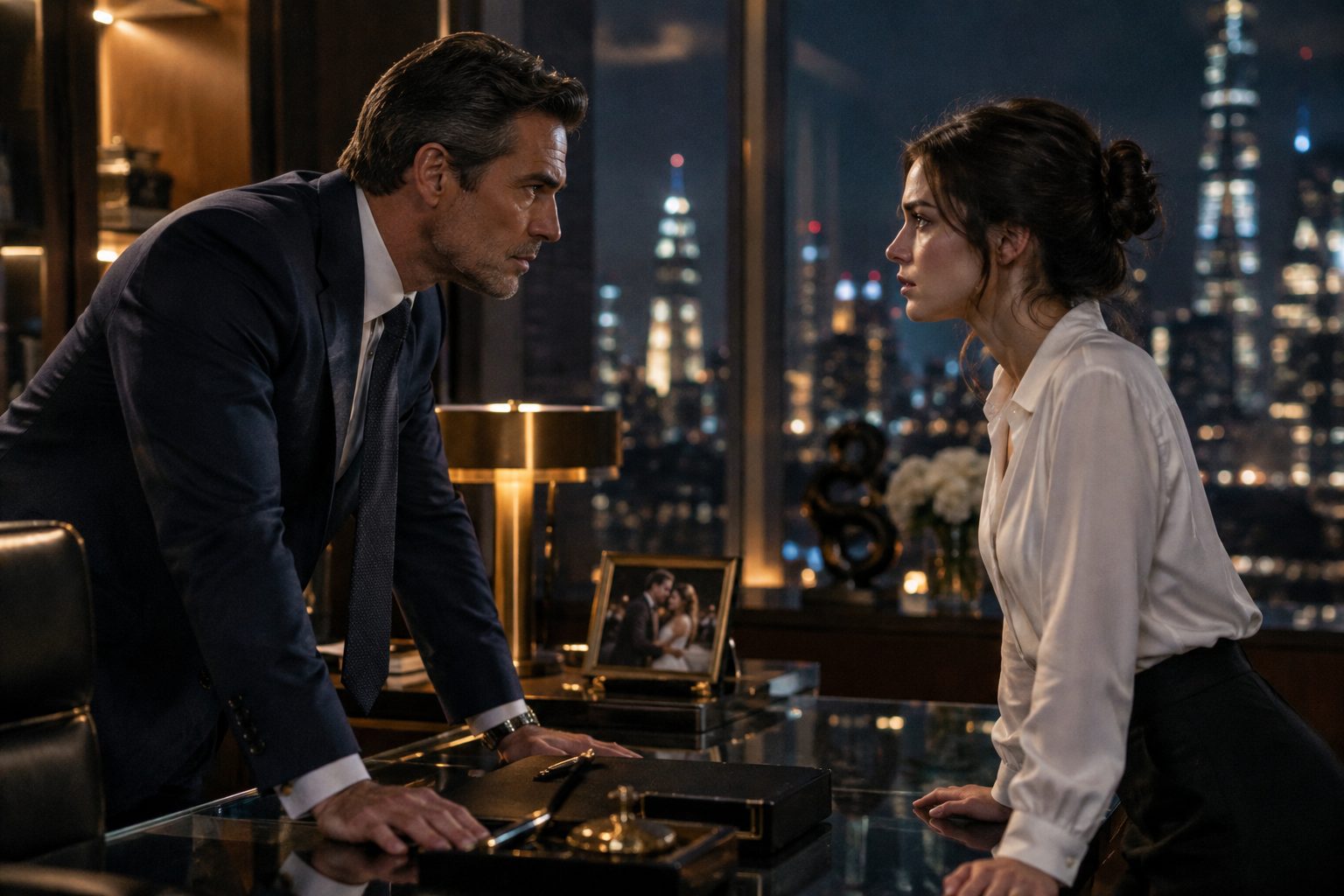
Illustration: DramaSo Team · When two people share the frame, each needs their own references and a clear position
This test looks specifically at whether H3 keeps several characters and their voices consistent, which maps directly onto two-person drama scenes:
Video: The AI Brief · MiniMax H3 multi-character and voice consistency test
Decision filter: Does this shot have to match the previous shot’s blocking? Yes means H3 Max with face lock and a pinned first frame. No means Turbo is faster.
How to do it in DramaSo
- Open DramaSo and paste a script, or start from the AI Drama Generator.
- Listen to the voiced episode first and settle the pacing before spending video credits.
- Upload a look pack for each main character: front, profile, full body, signature detail.
- Keep empty shots and transitions on image-to-video. For shots with characters, pick MiniMax H3 Max Turbo and face lock kicks in automatically.
- Preview the whole episode, pick the continuity-critical and emotional-peak shots, and re-render those on H3 Max with pinned frames.
- Export captioned 9:16.
The H3 tiers are explained on the MiniMax H3 short drama generator page. The general method of locking look, wardrobe and light together is in How to keep AI short drama characters consistent. For the speed-ups, post-trained models and hosted endpoints that followed H3’s open-source release, read MiniMax H3 open-source ecosystem explained. What open source changes for the production line is in How H3 open source changes AI short drama production. Music video makers can read SunoMV’s music video face-lock comparison.
Frequently asked questions
Is H3 Max Turbo face lock cheaper than H3 Max?
No. By actual billed usage, both reference-to-video endpoints sit in the same price tier. Turbo is faster and allows more iterations; what is cheaper is Turbo image-to-video.
How many characters can one shot lock?
It depends on the slots. The H3 family and Seedance take 9 images, Wan 3.0 takes 10, which covers three people at three images each. Kling O3 takes 4, which is tight for two.
Can Turbo reference-to-video pin first and last frames?
No, it has no image_url or end_image_url. For a shot that needs face lock and matched blocking, use H3 Max reference-to-video.
Without portraits, does DramaSo still use reference-to-video?
No. Without character references it renders from the storyboard still with image-to-video as usual.
Can FLUX 3 lock a character?
No. FLUX 3 has no character-library reference-to-video. Its edit-video endpoint is for modifying a clip you already generated.
Face lock is not about one shot looking better. It is about the heroine in shot thirty still being the person from episode one. Less rework is how a season actually gets finished.
Make a short drama where the lead keeps one face:
- 🎬 DramaSo: https://drama.so/en
Popular guides
More in this series
- Kling 4.0 for Short Drama, Tested: API Timings, Real Costs and 30-Second Shots
- How to Turn Text into an Animation You Can Play
- Gemini Omni 1.1 Flash for Short Drama: Keep the Lead Across the Cut
- How to Turn a Script into a Short Drama with Script-to-Video AI
- Short Drama Storyboard from a Script (9:16 Shot Table)
View all 21 articles in Making AI Short Dramas →