
How H3 Open Source Changes AI Short Drama Production: Fixed Actors, Lip Sync, Batches and Licensing

Your short drama studio shipped three series last month. Eighty episodes each, dozens of shots per episode, and the male lead is the same virtual actor in all of them. Every new series, you shoot his look photos again, feed the reference images again, and hope his brow sits at the same height as last season. Then someone drops a message in the team chat: H3 is open source, you can train your own fixed actor now.
This is more than one more free model. For short drama, H3 going open source reshuffles several steps of the production line: whether an actor can become an asset you reuse, who handles lip sync, where batch drafts run, and which things the license simply does not let you do yourself.
Most coverage stops at “33B parameters, runs locally.” This post walks a short drama production line step by step and looks at what open source added and what it did not.
Table of Contents
- What the H3 release includes and what it means for drama
- Fixed actors with LoRA and fine-tuning on open weights
- Lip-sync post-training and speed-ups
- Do the math before batching locally
- Licensing and rights are the hard gate
- Cost by route and a production line we recommend
- Frequently asked questions
What the H3 release includes and what it means for drama
MiniMax’s open-source announcement is dated August 3, 2026. It ships two BF16 checkpoints: Base FL2VA (text to audio-video and first/last frame) and Base Ref2VA (reference images, videos and audio to audio-video). The backbone is a 33B-parameter dense Transformer, with 4 to 15 second output at 24 FPS and 32 kHz stereo audio.
Two points matter most for drama:
- Ref2VA is open. Face lock and voiced performance run locally, and you can keep training on top. MiniMax says it released the complete weights to support further development, including fine-tuning.
- 2K refinement and preprocessing are not. Context-IR and Regenerate-2K stay on the hosted side. Local weights produce native resolution; the 2K output of hosted endpoints cannot be reproduced locally.
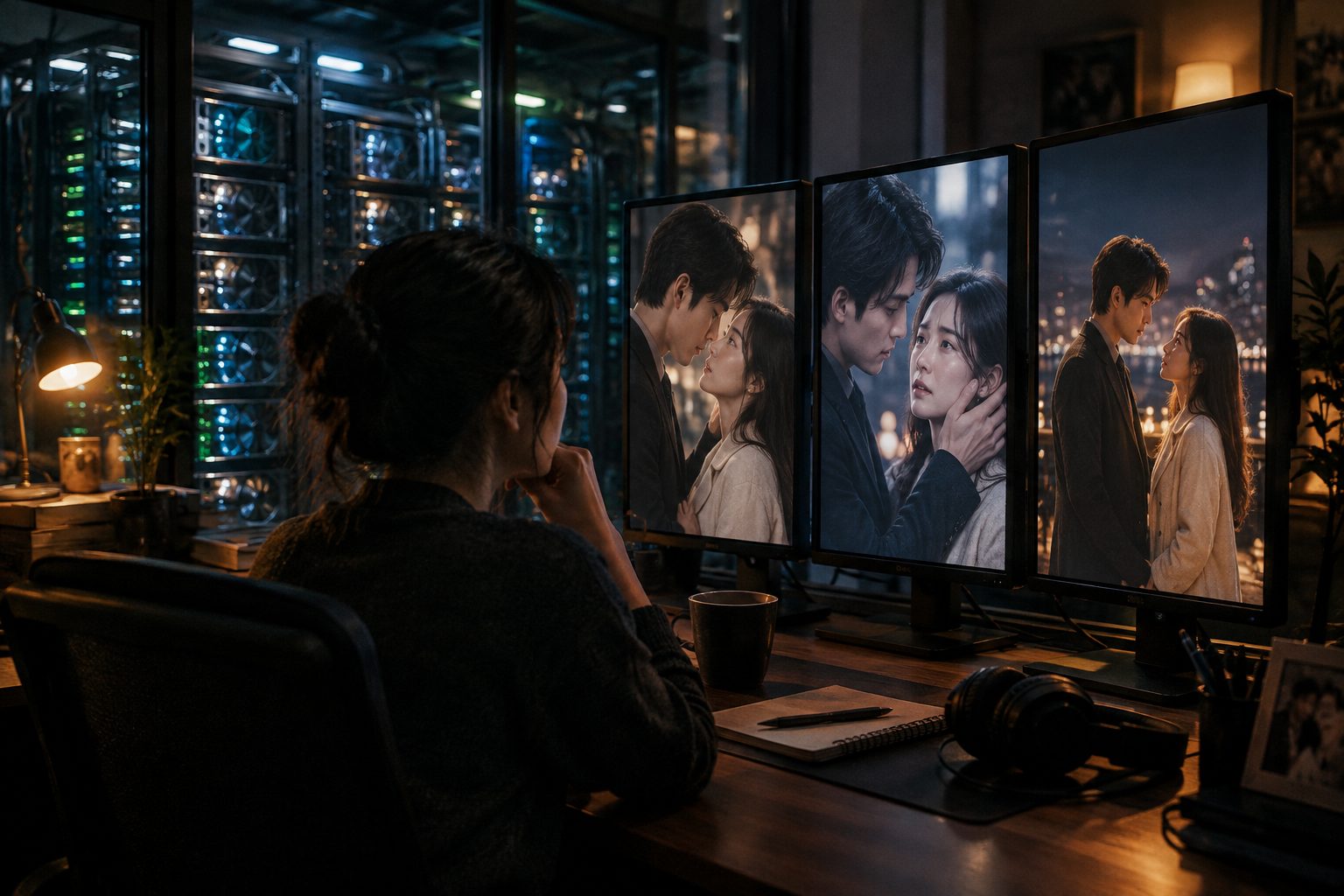
Illustration: DramaSo Team · Open weights let parts of a drama production line move onto your own machines
Practical rule: Open source buys you trainability and batch capacity, not higher image quality. For 2K output, stay hosted.
Fixed actors with LoRA and fine-tuning on open weights
The most expensive asset in a short drama is the actor. Live-action drama locks actors with contracts. AI drama used to lock them by feeding reference images every time. Reference-to-video does lock a face, but it takes nine images each time, and across a new series or a new camera style the face still drifts a little.
Open weights add another route: take dozens of images of the virtual actor from different angles and lighting, and train a character LoRA on H3. Once trained, the actor is a reusable “actor file” you can call across series and seasons. Community training code already exists; the awesome-minimax-h3-integration list includes projects such as DMAD and OpenVDN that ship training code.
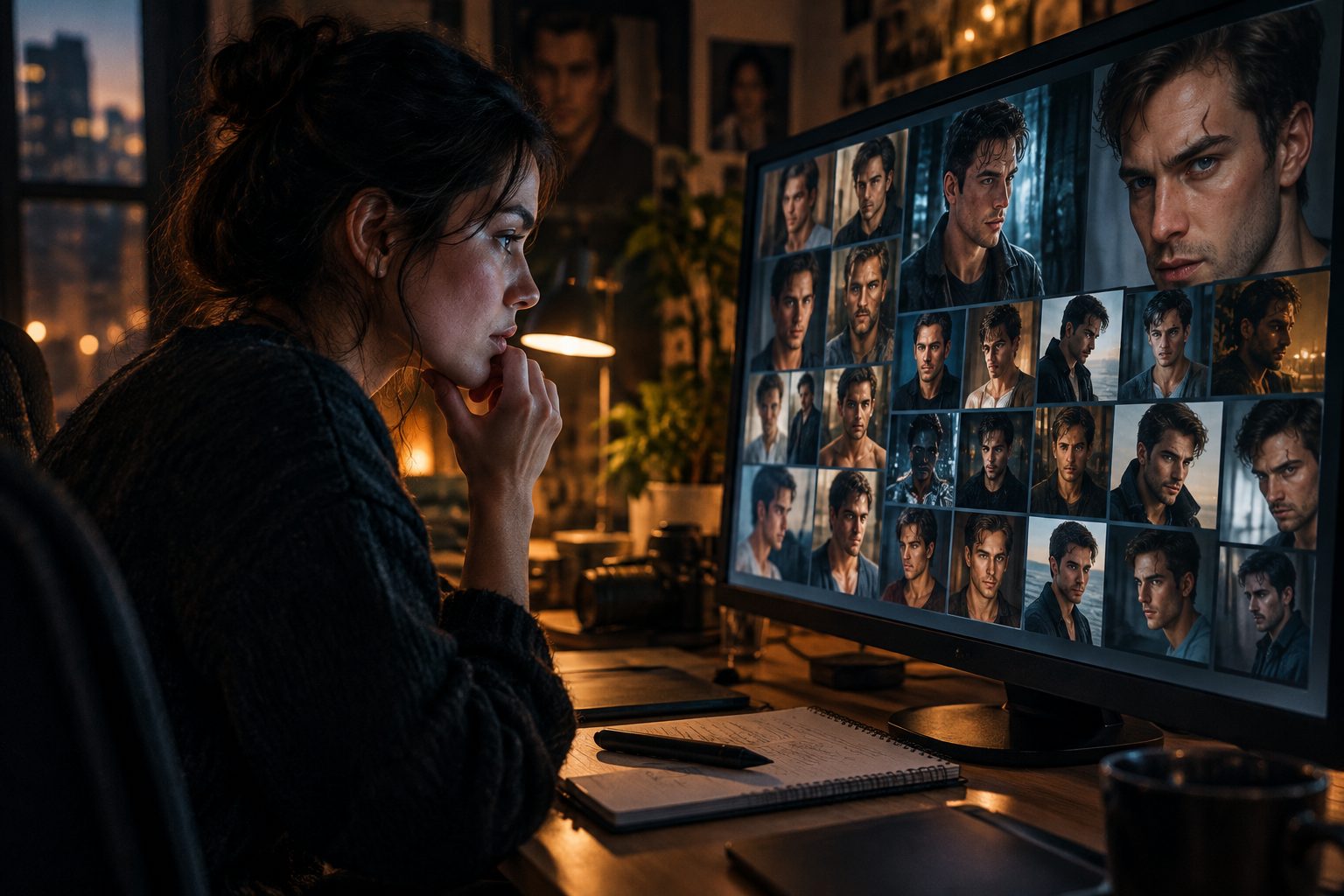
Illustration: DramaSo Team · A fixed actor starts with a training set that covers distinct angles and lighting
Do not rush to train. Our test is simple:
- If the actor will appear in three or more series, train.
- A supporting character in one series is fine with reference-to-video face lock. Training would be wasted effort.
- You must have the rights to the training images. Training “someone who looks like” a real celebrity is where compliance trouble starts first (more below).
Practical rule: Train LoRAs only for leads who will be reused across series. Supporting cast gets reference-image face lock.
Lip-sync post-training and speed-ups
Short drama runs on dialogue. A mismatched mouth breaks immersion faster than a visual glitch. Since the open-source release, three kinds of tools have appeared in the lip-sync layer:
- Audio-driven workflows on Ref2VA. Feed the voice-over as reference audio and the character speaks. The community already has ComfyUI workflows for two-character dialogue plus singing, running with 4-step acceleration.
- Post-trained models. HeyGen Video is HeyGen’s general video model built on H3 and post-trained by HeyGen: 5 to 15 second clips with sound in text, image and reference modes. Hosted “H3 Max Lip Sync” style products turn a portrait plus audio into a talking video.
- Speed-ups. FastH3 from Hao AI Lab at UCSD distills diffusion from 49 steps to 4. A 15-second clip takes 47.2 seconds on one B200 against 678.7 seconds for base H3, about 14.4x. The preview supports text to audio-video only; reference-to-video is in development, so it cannot lock faces yet.
For a drama line, that means drafts keep getting cheaper and faster, while dialogue close-ups can go to dedicated post-trained models. This video shows open H3 in ComfyUI with native audio, voice cloning, Ref2VA and first/last frame, so you can see what the local route involves:
Video: Vantage with AI · Open MiniMax H3 in ComfyUI with audio, Ref2VA and first/last frame
Do the math before batching locally
“Local means free” is the most common mistake. The hardware bar is higher than the threads suggest: the official SGLang example uses 4 GPUs with sequence parallelism, and according to nxcode’s breakdown, each task’s weight folder is about 144 GB. 8GB cards work by trading precision and resolution.
Then look at how many of your shots really need face lock. On our sister product SunoMV over the last 90 days, Seedance Fast made about 69% of clips, H3 Max Turbo about 5.8% (roughly 6 times H3 Max) and FLUX 3 about 0.2%. Default rendering is almost always image-to-video, with a storyboard still as the first frame. Reference-to-video is the upgrade for shots with character portraits or a motion reference clip.
What that means for local batching:
- Empty shots, transitions and location shots are the bulk, and image-to-video handles them. Hosted H3 Max Turbo image-to-video lists at about $0.025 to $0.08 per second. There is not much left to save by self-hosting.
- Face-locked shots are the expensive part. Hosted Turbo and H3 Max reference-to-video sit in the same tier (about $0.08 per second at 768P); Seedance Fast is about $0.24 per second at 720p. Local starts to pay off when you have many face-locked shots and your own GPUs.
- The biggest local cost is people. Deployment, queues, out-of-memory errors and version upgrades all need someone watching.
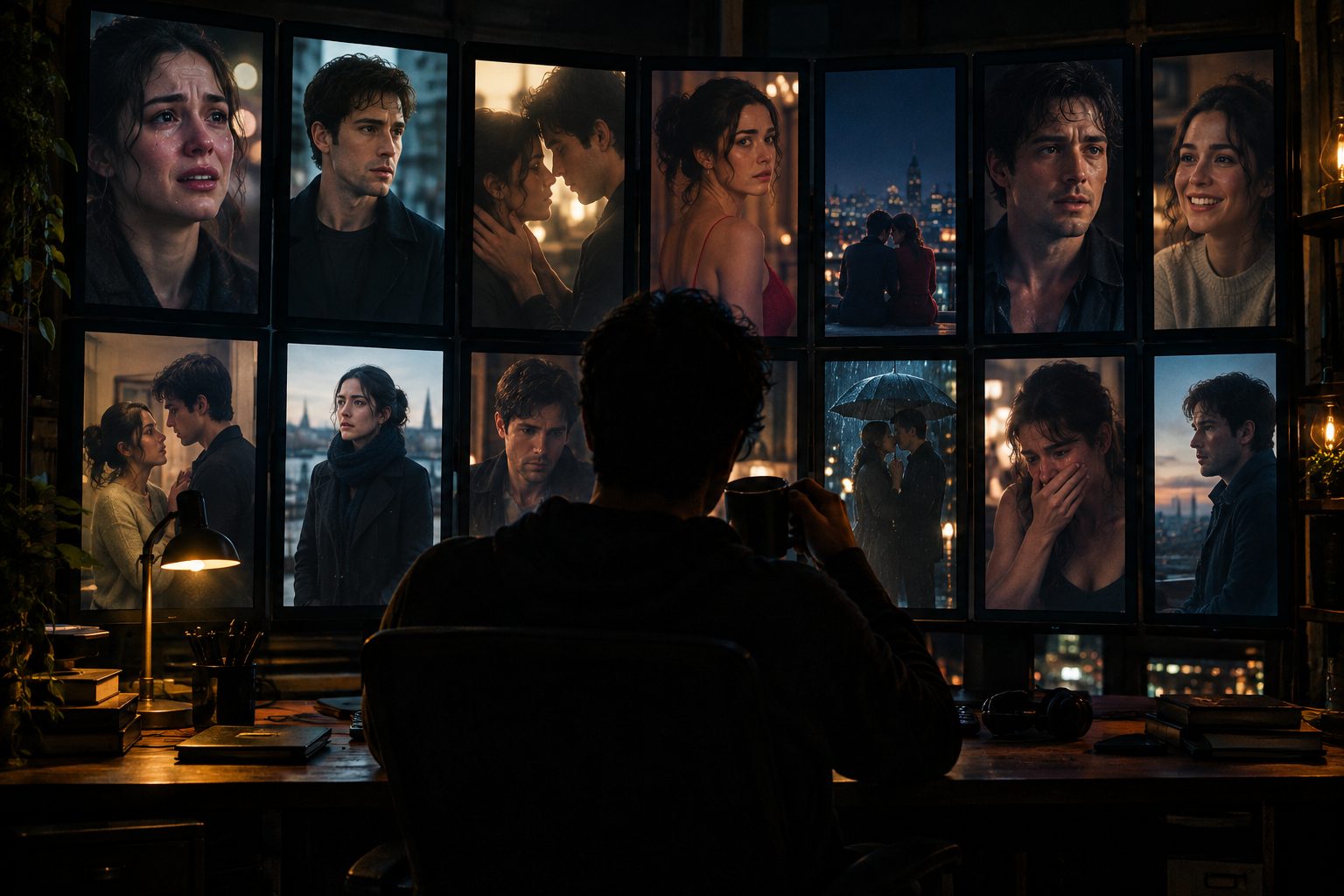
Illustration: DramaSo Team · Local batches suit whole-season drafts and a fixed actor’s many shots, not scattered renders
Decision filter: Can your monthly volume of face-locked shots pay for the GPUs and one person’s time to run them? If not, stay hosted.
Licensing and rights are the hard gate
Open weights do not mean unrestricted commercial use. H3 ships under the MiniMax H3 Community License, not Apache or MIT. Per nxcode’s reading of the license, several terms matter to drama teams:
- Territory: the license excludes the United States, the United Kingdom, the European Union and South Korea, which need separate authorization from MiniMax. A drama team based there needs that settled before self-hosting.
- Revenue threshold: organizations above $20 million in annual revenue need written commercial authorization.
- Attribution: commercial products or services built on H3 must display “MiniMax H3” prominently in their interface.
- Output use: using H3 works or outputs to train or fine-tune models other than H3 derivatives is restricted.
That is a third-party reading. Before you start, check the license text and Q&A linked from MiniMax’s model page. With hosted endpoints the platform handles endpoint-side terms, but copyright and likeness rights in your content are still yours to clear.

Illustration: DramaSo Team · Clear the license and likeness rights before you count savings
A word on likeness: training a fixed actor who “looks like” a celebrity is the riskiest move, whether open or hosted. Fixed actors should start from an original design.
Practical rule: Confirm three things before self-hosting: your territory, your annual revenue and the rights to your training images. If any is unclear, use hosted endpoints first.
Cost by route and a production line we recommend
| Route | Face lock | Reference price (~720p, per second) | Best for | Main limits |
|---|---|---|---|---|
| Local open weights (+ LoRA) | Ref2VA face lock, trainable fixed actor | Hardware + power + people | Leads reused across series, whole-season drafts | No 2K refinement, license limits |
| Hosted H3 Max Turbo | Reference-to-video, 9 images | ~$0.04 image-to-video, ~$0.08 reference (768P) | Iterating many dialogue shots | Reference mode cannot pin frames |
| Hosted H3 Max | Reference-to-video with start/middle/end frames | ~$0.08 (768P) | Shot/reverse-shot continuity, final shots | Slower than Turbo |
| Hosted Seedance 2.0 Fast | 9 images + video + audio | ~$0.24 (0.6x with reference video) | Voiced performance, motion reference | High rate |
| Hosted Wan 3.0 | 10 images + 5 videos + 5 audio | ~$0.10 | Long takes, group scenes | Drifting long takes are costly to redo |
Hosted prices from each model’s fal page and llms.txt, checked 2026-10-26. H3 Max Turbo reference-to-video is converted from actual billed usage on 2026-10-26.
The hybrid line we recommend:
- Script and voice first. Voice the whole episode and settle pacing before spending video credits.
- Empty shots and transitions on hosted image-to-video. Turbo image-to-video is cheap and fast.
- Character shots on reference-to-video. Iterate on Turbo; move final shot/reverse-shot pairs to H3 Max with pinned frames.
- Consider a LoRA for cross-series leads. Only when the actor will appear in three or more series and the license allows it.
- Dialogue close-ups get lip sync. Reference audio carries wide and medium shots; close-ups get a mouth pass.
The first three steps already work end to end in DramaSo: render with MiniMax H3 Max Turbo and face lock kicks in whenever the character has portraits. The tiers are explained on the MiniMax H3 short drama generator page, and the model-by-model face-lock comparison is in Face lock for short drama. For the full H3 open-source map, read the pillar MiniMax H3 open-source ecosystem explained. The music video side of lip sync is covered by SunoMV in the H3 open-source lip-sync workflow for music videos.
Frequently asked questions
Does H3 open source make AI short drama free to produce?
No. The weights are free, but you need multi-GPU hardware, storage and someone to run it, and 2K refinement was not released. For scattered renders, hosted endpoints cost less.
Can I use a fixed actor trained on open H3 commercially?
It depends on the license. Per third-party readings, territory, a revenue threshold, interface attribution and output use are all restricted. Check the official license text, and make sure you have rights to the training images.
Can FastH3 batch face-locked shots?
Not yet. The FastH3 preview supports text to audio-video only. Reference-to-video is in development, so it is a draft tool for now.
Is HeyGen Video open source?
HeyGen describes it as a model post-trained on MiniMax H3 and offers it as a hosted model. We found no public release of its post-trained weights.
Is hosted output the same quality as local weights?
Not quite. The hosted system includes the unreleased Context-IR preprocessing and 2K refinement. Local weights produce native resolution.
Open source lets a drama team turn an actor into its own asset for the first time, as long as the license allows it and the shot volume pays for the GPUs. Everything else runs more steadily on hosted endpoints.
Start making a short drama:
- 🎬 DramaSo: https://drama.so/en
Popular guides
More in this series
- When AI Took the Set: Live-Action Microdrama Jobs vs the New Pipeline
- Korean and Chinese Short Drama Recommendations: A 2026 Viewer's Guide
- AI Short Drama Goes Global: The 2026 Overseas Boom, Big Players, and Creator Payouts
- After Ten Thousand a Month: China's AI Short Drama Saturation and the Openings Left
- Seedance 2.5 for Short Drama: 30 Seconds Kills the Seam, 50 References Kill the Recast
View all 11 articles in Short Drama Industry & Market →