/logo.webp)
UGC Prompts: 10 Copy-Paste Templates (2026)
People searching UGC prompts are not looking for a seminar on authenticity. They have a product, a phone, and fifteen seconds. They want a brief they can paste into a creator doc, a shot list, or an AI video tool — hook, beats, visual notes, CTA — without rewriting the ad from a one-line vibe.
That is the job. TikTok’s own Creative Center frames UGC-style ads as native clips, not polished spots: the first line has to work on mute, the product has to appear early, and the last line has to ask for a comment or a tap. A prompt that says “make it feel real” does none of those.
This page is 10 copy-paste rules and 6 full templates. Every tip has a block you can steal. The anti-example is the same intent written as empty adjectives. When you want three new variants instead of one, paste the same slots into DramaSo’s UGC prompt generator.
Table of Contents
- What a UGC prompt actually has to contain
- The slots a UGC prompt uses
- 10 copy-paste tips
- 6 format templates
- Empty prompt vs copy-paste prompt
- After you copy: generate more in DramaSo
- FAQ
What a UGC prompt actually has to contain
A UGC prompt is a shootable brief, not a brand manifesto. If you cannot hand it to a creator who has never seen the product and get a clip back, it is not a prompt yet.
The format decides the pictures. Talking-head is a face, a first line, and captions. Skit is two people and a punchline. POV is hands and a phone. Unboxing is top-down reveal. Day-in-life is three locations and one object. Switch the format and the same product becomes five different ads.
TikTok Creative Center’s ad examples keep repeating the same physical constraints: vertical 9:16, first three seconds on mute, text on screen. Your prompt has to name those, or the model (or the creator) will invent a landscape cinematic that dies in For You.
Practical rule: If the prompt does not name a format, a first line, three beats, and a CTA, you will get a slogan.
The slots a UGC prompt uses
Do not write “make it UGC.” Fill the slots. Then paste.
| Slot | Fill this | Anti-example |
|---|---|---|
| Format | talking-head / skit / POV / unboxing / day-in-life | “a cool UGC vibe” |
| Platform | TikTok / Reels / Shorts / short drama | “social” |
| Hook | The first spoken line, mute-readable as text | “a strong hook” |
| Beats | Three actions, one sentence each | “show the product nicely” |
| Visual | Framing, captions, where the product sits | “cinematic, high quality” |
| CTA | A question the comments can answer | “don’t forget to like and subscribe” |
| Negative | Logo soup, fake UI, landscape, beauty blur | (blank) |
Here’s the generator doing the same job — format chip, platform chip, three complete briefs per click:
Screenshot: DramaSo UGC prompt generator
A UGC brief is a shootable document — hook, beats, product in frame — not a mood board. The clip below walks the same job from brief to finished ad.
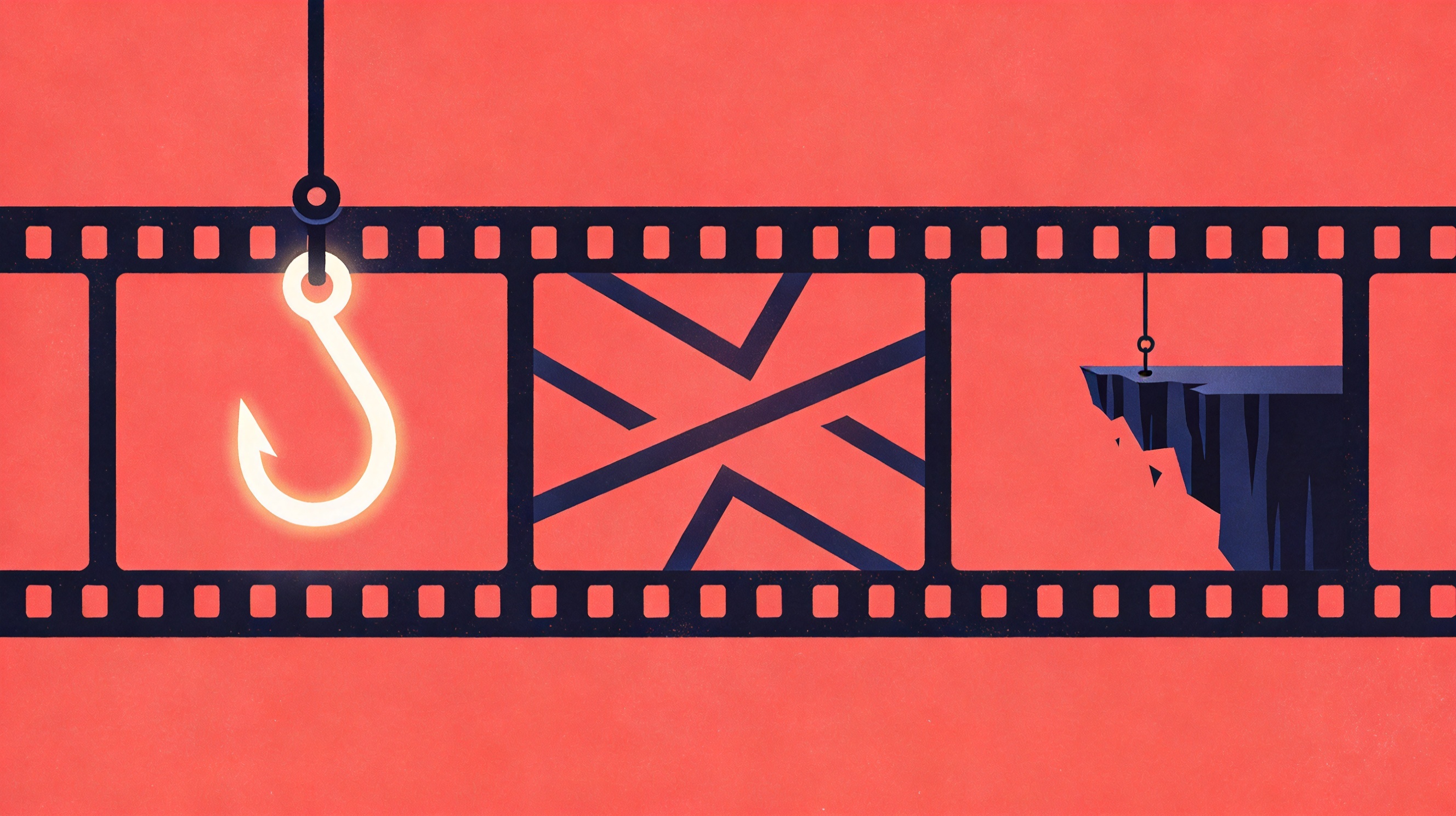
Screenshot: DramaSo production reference
Practical rule: Empty cells get filled with the blandest default. Skip the negative and you will get a logo collage.
10 copy-paste tips
Each tip is a full block. The anti-example is the same intent as empty adjectives. In DramaSo: open the UGC prompt generator, pick the matching format, and paste anything you still want to lock.
1. Open on a first line you can mute-read
One-line rule: if the first sentence needs sound, it is not a UGC hook.
Format: talking-head, 9:16, captions on from frame one.
Hook (spoken and on-screen): "Stop scrolling if you have been putting this off."
Do not start with a logo, a smile, or "hey guys."
Anti-example: Start with a catchy intro.
How to use it in DramaSo: pick talking-head, generate, keep the hook that still makes sense with the sound off.
2. Write three beats, not a paragraph
One-line rule: a paragraph cannot be shot.
Beat 1: Face to camera, hold the messy "before" in frame.
Beat 2: Hands only, one clear use of the product, no voice-over.
Beat 3: Back to face. Name the payoff in one sentence. CTA while the product is still visible.
Anti-example: Tell a complete brand story in 30 seconds.
How to use it in DramaSo: the generator already returns beats as three lines. Do not merge them back into prose.
3. Name the format in the first line of the prompt
One-line rule: format is the product.
This is a POV UGC clip, not a talking-head.
Hands and product only. No face. Phone-height, 9:16.
If a face appears, the prompt has failed.
Anti-example: Make it feel like user-generated content.
How to use it in DramaSo: tap the POV chip before you generate. Do not describe POV in adjectives while the chip is still on talking-head.
4. Put the product in frame on beat 2, not in the outro
One-line rule: a CTA with no product is a speech.
The product must be in frame by second four.
Beat 2 is a tight insert: one use, one result, captions naming the object.
Do not wait until the last second to reveal it.
Anti-example: Show the product when it feels natural.
How to use it in DramaSo: if you typed a product name in the box, check that all three briefs mention it in beat 2.
5. One objection, one payoff
One-line rule: two arguments is an explainer, not a UGC ad.
Name one objection in the hook ("too expensive" / "no time" / "already tried the cheap one").
Answer it once in beat 3. Do not list features.
Anti-example: Cover all the benefits so nothing is missed.
How to use it in DramaSo: regenerate until each of the three briefs attacks a different objection. Keep the sharpest one.
6. Captions are part of the prompt, not decoration
One-line rule: mute viewers only get the text you specified.
Captions on from frame one, max 6 words per card.
The first caption duplicates the hook.
No tiny legal text. No watermark.
Anti-example: Add some trendy text.
How to use it in DramaSo: copy the hook line into your caption tool unchanged. If you rewrite it, the mute test fails.
7. End with a comment-shaped CTA
One-line rule: “link in bio” is not a UGC ending.
CTA, spoken and captioned: "What would you even use this for first — tell me in the comments."
Hold the product in frame through the last second.
No "like and subscribe." No URL on screen.
Anti-example: Strong call to action.
How to use it in DramaSo: platform chips change the last line. TikTok and short drama should ask; Reels can ask too. Do not paste a YouTube outro.
8. Lock vertical and mute-safe in the prompt
One-line rule: if you do not say 9:16, you will get 16:9.
Aspect: 9:16 vertical only.
Safe-action: faces and product in the centre third.
Must work with sound off. Music is optional; the first line is not.
Anti-example: Optimized for social media.
How to use it in DramaSo: every generated brief already says vertical. If you paste into another tool, take this block with you.
9. Write a negative line
One-line rule: models fill silence with stock-ad clichés.
Negative: no logo soup, no fake phone UI, no beauty blur, no landscape, no studio backdrop, no "AI-generated" look, no watermark.Anti-example: (leave the negative blank)
How to use it in DramaSo: append this negative to any brief you copy out. The generator’s visual notes assume it; other tools do not.
10. Write the hook as spoken words, not as a theme
One-line rule: “urgency” is not a line an actor can say.
Hook, spoken verbatim: "I almost did not post this — then the comments started."
Do not describe the emotion. Write the sentence.
Anti-example: Open with urgency and social proof.
How to use it in DramaSo: if a generated hook is a theme instead of a sentence, discard it and generate again.
6 format templates
Each template is one pasteable brief. Swap the product noun. Keep the rest.
Talking-head: night serum
Format: talking-head UGC, TikTok, 9:16, captions on.
Hook: "Stop scrolling if you have been putting this off."
Beat 1: Face to camera, bathroom light, hold the closed bottle.
Beat 2: Hands only, one pump, 7-day jump-cut, same frame.
Beat 3: Face again. "Three nights, not three months." CTA: "What would you even use this for first?"
Visual: centre third, no beauty blur, product label readable.
Negative: no studio, no logo soup, no fake UI.
Product: a night serum.
Skit: two-shot planner
Format: skit UGC, Reels, 9:16.
Hook: "POV: you finally stop explaining and just show it."
Beat 1: Two-shot at a kitchen table. One person dumps a pile of sticky notes.
Beat 2: Cut to the weekly planner opening. Hands only, one page, captions on the first line.
Beat 3: Reaction two-shot. Punchline: "That is the whole system." CTA as a question.
Visual: two faces readable, one accent colour, product on the table the whole time.
Negative: no laugh track, no jump-scare zoom, no watermark.
Product: a weekly planner.
POV: language app
Format: POV UGC, Shorts, 9:16. Hands and phone only. No face.
Hook on-screen: "Wait. Watch the first three seconds before you judge it."
Beat 1: Phone unlocked to a messy notes app. Thumb hovers.
Beat 2: Open the language app. One lesson. One checkmark. Captions name the streak.
Beat 3: Lock screen. CTA: "Would you actually finish this on the commute?"
Visual: phone-height, over-shoulder, real notifications allowed, no fake UI mockups.
Negative: no face, no landscape, no glossy 3D phone.
Product: a language app.
Unboxing: wireless mic
Format: unboxing UGC, TikTok, 9:16, top-down.
Hook: "The version nobody puts on the product page."
Beat 1: Closed box, hands only, one tap on the lid.
Beat 2: Reveal. Mic in frame, cable in frame, one live level check.
Beat 3: Clip it on a shirt. CTA: "Studio or sidewalk — where would you take this first?"
Visual: top-down, hard table light, label readable, no stock confetti.
Negative: no studio sweep, no beauty blur, no fake unboxing table.
Product: a wireless mic.
Day-in-life: protein shaker
Format: day-in-life UGC, TikTok, 9:16, three locations, one product.
Hook: "Everyone told me this would flop. Here is day seven."
Beat 1: Kitchen, morning, shaker on the counter.
Beat 2: Gym bag insert, same bottle, captions "same bottle, second stop."
Beat 3: Desk, evening. CTA: "Where does yours actually live — bag, fridge, or sink?"
Visual: three locations, same colour grade, product in every beat.
Negative: no montage music-video, no six locations, no logo end-card.
Product: a protein shaker.
Short-drama beat: carry the UGC into an episode
Format: short-drama UGC beat, 9:16, 12 seconds.
Hook: "This is the beat that makes people rewind, not swipe."
Beat 1: Face, one line of dialogue that names the problem.
Beat 2: Product as a prop, not an ad — it solves the line from beat 1.
Beat 3: Hold on the reaction. CTA is a cliffhanger question, not a shop link.
Visual: drama lighting, captions, product readable but not a packshot.
Negative: no hard sell, no "buy now", no landscape.
Use this when the clip has to sit inside a vertical episode, not a standalone ad.
Practical rule: Swap one noun. If you have to rewrite the beats, the template was not a template.
Empty prompt vs copy-paste prompt
| Empty | Pasteable |
|---|---|
| “Write a UGC ad for my serum” | Talking-head template above |
| “Make it viral” | Hook as spoken words + mute captions |
| “Show the product” | Beat 2 insert with a frame-time |
| “Add a CTA” | A question the comments can answer |
The empty column is how most “UGC prompt” posts are written: a paragraph of advice, zero pasteable text. The right-hand column is what ranks and what ships.
Need a board instead of a talking-head brief? Use AI video / storyboard prompts and the script visual prompt generator. Do not mash a UGC hook into a camera-negative pack.
After you copy: generate more in DramaSo
Three steps.
- Copy one block from this page.
- Open the UGC prompt generator. Pick the same format. Paste anything you want locked (product, objection, CTA).
- Generate three variants. Copy the batch. Shoot or paste into your AI video tool.
The generator runs in the browser — no account, nothing uploaded. English output is intentional: UGC briefs and the models that shoot them are written in English even when the rest of the page is not.
If you are building a faceless channel around these clips, continue with faceless drama channel and short drama monetization.
FAQ
What is a UGC prompt?
A UGC prompt is a shootable brief for a user-generated-content clip: format, hook, three beats, visual notes, and a CTA. It is not a brand slogan and it is not a 30-second TV script. You can paste it to a creator or into an AI video tool.
How do I write UGC prompts for TikTok?
Lock 9:16, write a mute-readable first line, put the product in frame by second four, and end on a comment-shaped question. Use the talking-head or POV template on this page, or generate three at once in the UGC prompt generator.
Can I use these prompts in an AI video tool?
Yes. The blocks are plain text. Keep the negative line. Do not add “cinematic, 8k, masterpiece” — that fights the UGC look.
Talking-head vs POV vs skit — which format should I pick?
Talking-head if the face is the ad. POV if the hands and the product are the ad. Skit if the joke needs two people. Unboxing if the reveal is the ad. Pick one format per clip.
Do I need an account to generate more?
No. DramaSo’s UGC prompt generator is a free in-browser tool. Copy the batch and leave.
UGC prompt vs storyboard prompt — what’s the difference?
A UGC prompt is a 15-second creator brief. A storyboard / AI video prompt is a camera pack (shot, light, negative) for a model that will draw the frame. Use this page for ads and talking-heads; use AI video storyboard prompts for scene stills.
Popular guides
More in this series
- AI Short Drama Production Cost: A 2026 Budget Teardown for Solo Creators
- The One-Person Short Drama Studio: How AI Cut a Full Vertical Series to Six Weeks
- How to Run a Faceless Drama Channel (Without Burning Out)
- Short Drama Monetization: How Vertical Series Actually Make Money
- Short Drama Script Structure: Hook, Conflict, Cliffhanger