/logo.webp)
MagicLight AI Review: Good for Stories, Check the Consistency

MagicLight AI is a story-first AI video platform: you give it a script or a premise, and it returns a storyboarded, voiced, lip-synced video with recurring characters. It is aimed at narrative content — animated stories, explainers, serialized fiction — rather than at ad creatives or product clips.
The short version: it is genuinely strong at turning long scripts into structured visual narrative, and the thing to test before you commit a series is character consistency across scenes. Below: what it does, what independent reviewers flag, the pricing shape, and when a short-drama-first tool fits better.
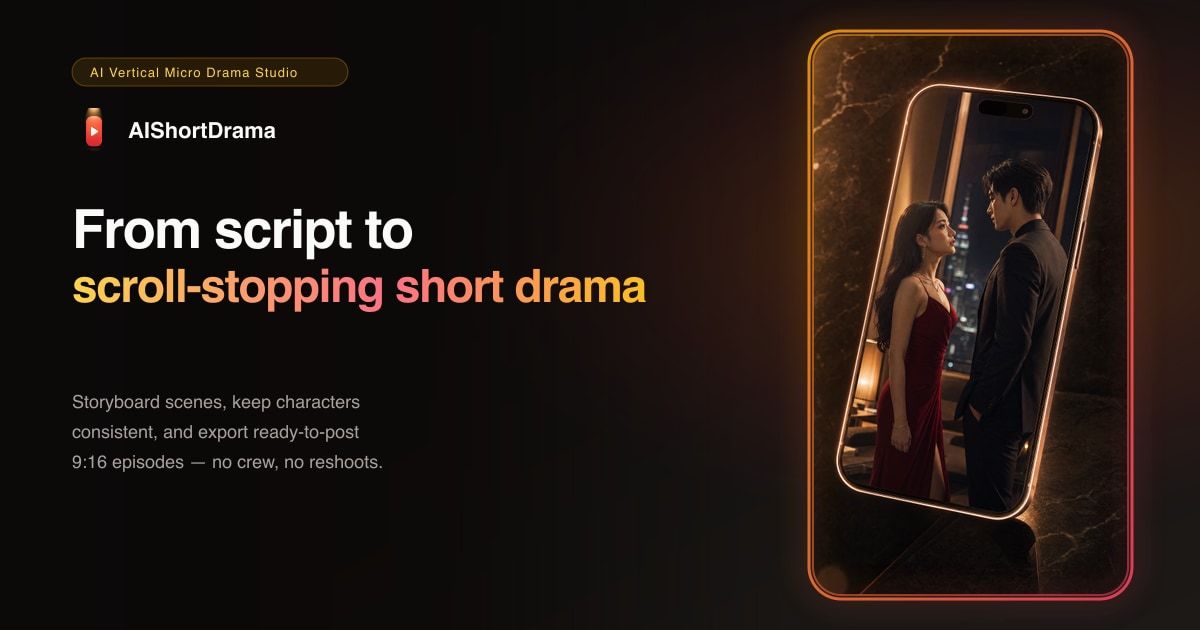
Screenshot: DramaSo — the short-drama-first alternative discussed at the end of this review.
What MagicLight AI actually does
The platform’s centre of gravity is script-to-video for long, character-driven pieces rather than single clips. The capabilities most consistently described across reviews:
| Capability | What it means in practice |
|---|---|
| Script-to-video | Paste a script, get an auto-generated storyboard and scenes |
| Character Lock | Define a character once, reuse them across scenes |
| Auto lip-sync | Mouth movement matched to the generated voiceover |
| Voice and subtitles | Narration plus caption generation in-platform |
| Long-form projects | Support for durations well beyond a typical clip tool |
Independent write-ups converge on the same framing — that this is a platform for turning written ideas into structured visual narratives, with recurring characters and storyboard control as the differentiators (Wondershare’s review, SoftwareTestingHelp).
Practical rule: judge a story-video tool on scene four, not scene one. Every generator looks good for a single shot; the difference shows up when the same character has to walk back in.
Where reviewers say it slips
Two criticisms recur across third-party testing, and both matter more for serialized drama than for one-off videos.
Realism. The house style is animated and stylized. One published verdict summarizes it as good for storytelling, weaker for realism — which is fine if you are producing animated fiction and a problem if your niche depends on live-action-adjacent believability.
Character consistency. Character Lock is a headline feature, and reviewers still report drift between scenes (TrakSource’s consistency test). This is not unique to MagicLight — it is the open problem of the whole category — but it is worth testing on your own cast before you plan a forty-episode arc around it.
Practical rule: run a three-scene test with the same character before paying for anything. If the face changes between scene one and scene three, every downstream episode inherits the problem.
Pricing shape
MagicLight is credit-based with a free tier and paid plans. Third-party trackers put entry pricing in the single-digit dollars per month with credit tiers climbing from there (SaaSworthy’s pricing page).
The number that actually matters is not the monthly fee — it is credits per finished minute, because story-format work regenerates scenes constantly. Before subscribing, produce one complete 60-second episode on the free tier and count how many credits it consumed including retries. Multiply by your intended weekly output. That figure, not the sticker price, tells you whether the plan is affordable.
Who it suits
A good fit if you are:
- Producing animated or stylized narrative content
- Working from finished written scripts rather than loose premises
- Making longer pieces — explainers, story compilations, narrated fiction
- Comfortable doing your own vertical reformatting and hook editing
A poor fit if you are:
- Producing vertical short drama at volume, where the unit is an episode chain rather than a video
- Dependent on photoreal output
- Optimizing for the first-five-seconds hook and per-episode cliffhanger structure that decides whether short drama retains
That last point is the real dividing line. Short drama is not “a story video, but vertical.” Sensor Tower’s short drama app report and Omdia’s $11 billion microdrama forecast describe a format whose economics run on serialized retention — episode after episode with the same cast — which is a different production shape from making one good video.
How it compares to short-drama-first tools
The category splits into two kinds of tool, and picking the wrong kind costs more than picking the wrong brand.
| Story-video platforms | Short-drama-first tools | |
|---|---|---|
| Unit of work | One video | An episode chain |
| Cast handling | Character lock per project | Cast locked across the arc |
| Structure | Storyboard from a script | Hook / escalation / cliffhanger per episode |
| Output shape | Long-form, any aspect | Vertical, serialized |
| Best for | Animated stories, explainers | Serialized vertical drama |
MagicLight, Pippit and Dreamina sit closer to the left column with varying degrees of drama tooling bolted on. DramaSo sits in the right column by design: a premise expands into an episode chain, the cast stays locked across the arc, and each episode is written to the hook-and- cliffhanger structure the format actually rewards.
Neither column is better in the abstract. If you are making one narrated story, the left column is the right answer. If you are trying to ship a catalogue of serialized vertical episodes, the right column removes the work you would otherwise do manually every single episode.
Practical rule: choose the tool whose unit of work matches yours. If you think in episodes and the tool thinks in videos, you pay that gap every week.
Verdict
MagicLight AI is a capable story-video platform with real strengths in script-to-video structure, recurring characters and lip-sync, priced accessibly enough to test properly. Run a three-scene consistency check and a credits-per- episode count on the free tier before committing.
If your goal is serialized vertical short drama specifically — episode chains, locked casts, cliffhanger structure — you will spend less time fighting the tool with a short-drama-first workflow.
FAQ
Is MagicLight AI free? There is a free tier with limits, plus credit-based paid plans. Trackers place entry pricing in the single-digit dollars per month.
Is it good for short drama? It can produce story content that works as drama, but its unit of work is a video rather than an episode chain, so serialized production takes more manual assembly than a short-drama-first tool.
How reliable is character consistency? Character Lock is a headline feature, and independent reviewers still report drift between scenes. Test with your own cast across at least three scenes before planning a series.
What is the best MagicLight alternative for vertical drama? Tools built around episode chains rather than single videos — including DramaSo — because they handle cast continuity and per-episode structure natively.
Does it do photoreal output? The house style is animated and stylized. Reviewers consistently describe realism as its weaker axis.
If you are producing episodes, not videos
Try the workflow built for serialized vertical drama: one premise, a locked cast, a full episode chain.
For a row-by-row comparison with sources, see DramaSo as a MagicLight alternative.
Create a series with DramaSo →
DramaSo Team
Popular guides
More in this series
- AI Short Drama Generators Compared: 6 Tools Side by Side
- Topview AI Review: An Honest, Source-Checked Look
- Runway vs Kling for Short Drama: Which AI Video Generator Wins? (2026)
- MiniMax Design (20 Aug 2026): a short-drama workbench, not another generate button
- LibTV vs Tiangong Short Drama Studio: Two Bets on AI Filmmaking in 2026
View all 8 articles in AI Drama Tool Comparisons →